
Hyaluronic Acid Supplement: Benefits, Dosage and Does It Work?
Do hyaluronic acid supplements work? Clinical trial results for skin hydration, the best dosage, side effects, and oral vs topical HA.
When life gets stressful, your body burns through certain nutrients faster, and running low on them can make stress feel even harder to handle. That’s why “what vitamins are good for stress?” is such a common question. The good news is that a few vitamins and minerals have solid research behind them. The less good news is that no vitamin will cancel out a 60-hour work week.
This guide explains which vitamins help with stress, whether stress can cause a vitamin deficiency, the best options for stress with poor sleep, and how to get these nutrients from food first.
Stress can drain some nutrients faster than usual. The clearest example is magnesium. Stress hormones increase how much magnesium you lose through urine, and low magnesium in turn makes the stress response more reactive. Researchers call this the magnesium-stress “vicious circle” (Pickering et al., 2020).
Stress also raises demand for B vitamins, which your body uses to make energy and the neurotransmitters that regulate mood, and for vitamin C, which your adrenal glands store in high amounts. On top of that, stressed people often eat less well, skip meals and lean on caffeine and alcohol, which can lower intake further. So while stress rarely causes a full deficiency by itself, it can tip a borderline intake into “not enough”.
These symptoms overlap with many other conditions, so a blood test is the only way to know. It’s worth asking your doctor to check B12, folate, vitamin D, iron and thyroid function if you’ve felt run down for weeks.
A meta-analysis of 12 randomized trials found that B vitamin supplements significantly reduced stress in healthy and at-risk people, with benefits greatest when diets were poor (Young et al., 2019). In a 12-week trial of full-time workers, a high-dose B-complex lowered personal strain, confusion and low mood linked to work stress (Stough et al., 2011).
The key B vitamins for stress are B6 (used to make serotonin and GABA), B12 and folate (important for mood and energy), and B5 (used by the adrenal glands). A methylated B-complex provides folate and B12 in their active forms, methylfolate and methylcobalamin. For a full breakdown, see which B vitamins are good for mood.
In a randomized trial of 120 young adults, 3,000 mg a day of sustained-release vitamin C for two weeks led to smaller blood pressure spikes, less subjective stress and faster cortisol recovery during a public-speaking and mental-arithmetic stress test (Brody et al., 2002). That dose is high, and you don’t need megadoses day to day. The recommended intake is 75 mg a day for women and 90 mg for men (NIH Office of Dietary Supplements), and smokers need 35 mg more.
Magnesium isn’t a vitamin, but it’s often the first nutrient to consider for stress. In a randomized trial of 264 stressed adults with low blood magnesium, 300 mg a day reduced stress scores by more than 40% over eight weeks. People with severe stress did even better when vitamin B6 was added (Pouteau et al., 2018). Magnesium glycinate is gentle on the stomach and a good choice for evenings. Learn more about what magnesium does for the body.
Low vitamin D is common, especially in winter and in people with darker skin or little sun exposure, and it’s linked with fatigue and low mood. But in a large five-year trial of more than 18,000 adults, vitamin D supplements didn’t prevent depression or improve mood in people who weren’t deficient (Okereke et al., 2020). The takeaway: test your levels and correct a deficiency, but don’t rely on vitamin D alone for stress.
A meta-analysis of eight randomized trials in healthy people found that taking a multivitamin and mineral supplement for at least four weeks reduced perceived stress, mild anxiety, fatigue and confusion. Formulas with high doses of B vitamins appeared most effective (Long & Benton, 2013). A multivitamin makes sense if your diet is inconsistent during busy periods.
Stress and poor sleep feed each other. For this combination, the most useful nutrients are:
| Nutrient | How it helps with stress | Top food sources | Evidence |
|---|---|---|---|
| B vitamins | Energy and neurotransmitter production; lower perceived stress | Eggs, meat, fish, legumes, leafy greens, whole grains | Moderate (meta-analysis, RCTs) |
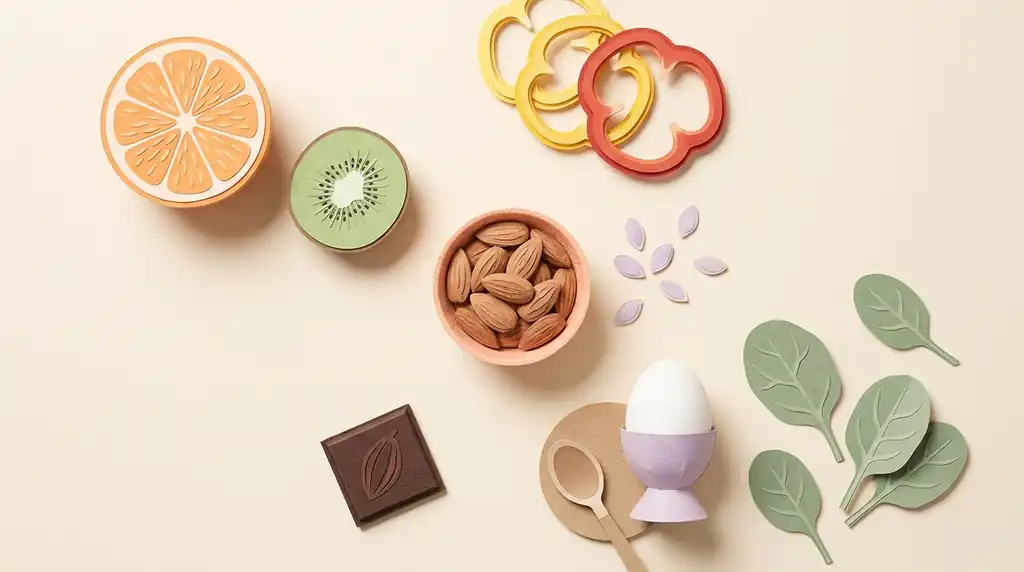
| Vitamin C | Smaller blood pressure spikes; faster cortisol recovery | Bell peppers, citrus, kiwi, strawberries, broccoli | Early (one RCT) |
| Magnesium | Calms the stress response; lost faster under stress | Pumpkin seeds, almonds, spinach, black beans, dark chocolate | Moderate (large RCT) |
| Vitamin D | Correcting deficiency supports energy and mood | Sunlight, oily fish, eggs, fortified milk | No benefit if levels are normal |
| Multivitamin | Covers gaps; lower stress, anxiety and fatigue | Varied, balanced diet | Moderate (meta-analysis) |
The Holitro Stress Pack combines a Methyl B-Complex and Magnesium Glycinate with Ashwagandha, Omega-3s, Glycine and Cordyceps in one daily tear-away pouch. It’s designed to support steady energy and everyday balance, without a cupboard full of bottles. Thirty pouches arrive each month.
Want to add vitamin C or vitamin D? Use the Custom Pack Builder. Taking medication? Please check with your doctor or pharmacist first.
A B-complex has the best evidence. Trials show it reduces perceived stress and work-related strain, especially in people whose diets are lacking. Magnesium, a mineral, is the other strong option.
B vitamins reduce stress but had no clear effect on anxiety scores in a large meta-analysis. Multivitamins reduced mild anxiety in healthy people, and magnesium may help mild anxiety. For anxiety specifically, herbs like ashwagandha and L-theanine have more direct evidence. See our guide to the best supplements for stress and anxiety.
No single deficiency “causes” stress, but low B12, folate, B6, magnesium and vitamin D can all cause fatigue, low mood and irritability that make stress harder to cope with. A blood test can check your levels.
They help most when your intake is low. In healthy people with good diets, the effects are modest. Vitamins support your body’s stress response, but sleep, exercise and managing the causes of stress matter more.
Vitamin C has the most direct evidence, helping cortisol recover faster after acute stress. For lowering cortisol overall, ashwagandha and omega-3s have stronger research. Read more in natural supplements to lower cortisol.
The vitamins that are good for stress are the ones stress tends to use up. A B-complex has the best evidence, magnesium is close behind, vitamin C helps buffer acute stress, and vitamin D is worth correcting if it’s low. Start with food, fill the gaps with a well-chosen supplement, and check your levels if you’ve felt run down for weeks. For herbs and other options beyond vitamins, see our full guide to the best supplements for stress and anxiety.
Do hyaluronic acid supplements work? Clinical trial results for skin hydration, the best dosage, side effects, and oral vs topical HA.
The best supplements for skin hydration and dry winter skin, ranked by evidence: hyaluronic acid, collagen, vitamin C, zinc and omega-3.
Can you take vitamin D and omega-3 together? Benefits, how much to take, side effects, and what the big VITAL and DO-HEALTH trials found.
Taking a multivitamin plus a few extras? It’s easy to double up without noticing. Add up your stack in 2 minutes and see where you stand against NIH limits.
