
5-HTP vs. Melatonin: Which is Better for Natural Sleep?
Are you struggling to fall asleep at night? Do you wake up feeling tired and groggy? Millions of people face similar challenges. As a result,
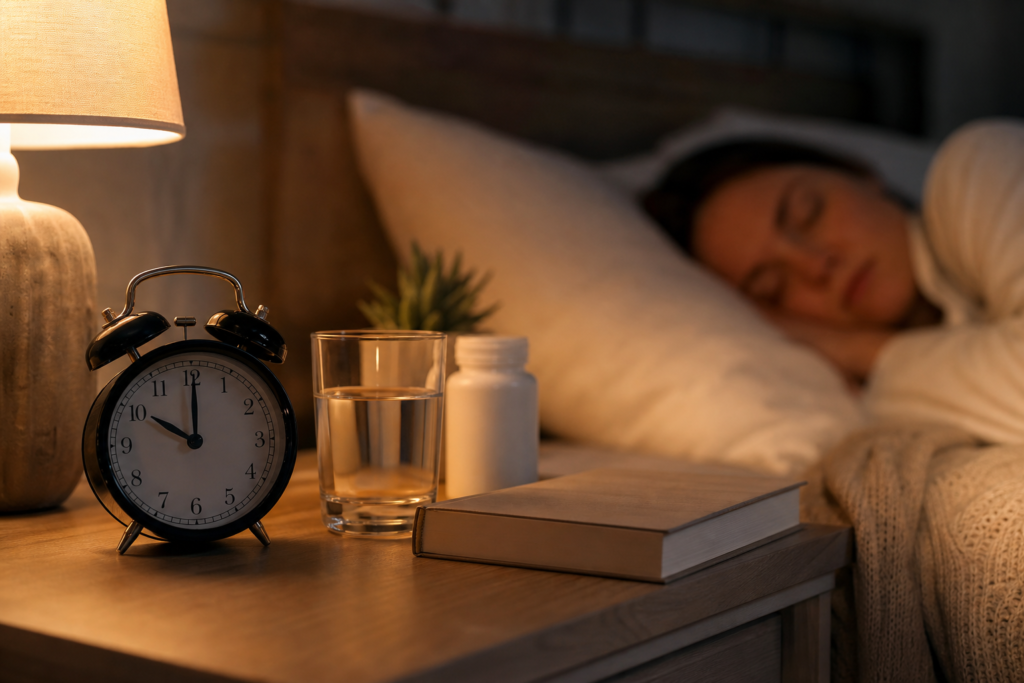
If you keep waking up during the night, it is tempting to blame one thing. Maybe you need a stronger supplement. Maybe you are just a light sleeper. Maybe stress is the whole story. In reality, why you keep waking up during the night is often more layered than that. Sleep can break up because of timing, stress, caffeine, alcohol, reflux, room temperature, light, snoring, or simply a habit of becoming alert whenever you notice you are awake.
That is why a practical sleep article should not jump straight to products. First, it helps to understand what counts as normal. Brief awakenings happen in healthy sleep. Many people do not even remember them by morning. The bigger issue is usually frequent waking that feels long, disruptive, or tied to symptoms such as stress, racing thoughts, snoring, or morning exhaustion.
Research and clinical guidance support that broader view. Sleep medicine sources describe trouble staying asleep as one form of insomnia, while circadian and behavioral factors can make those awakenings more likely or harder to recover from. For many adults, a consistency-first routine, calmer evenings, and better timing around light and stimulants help more than chasing a quick fix. Then, if a supplement fits, it works as support rather than as a substitute for the basics.
This guide explains why you keep waking up during the night in clear language, what you can change at home, where melatonin education and calming botanicals fit, and when nighttime waking should prompt a conversation with a qualified healthcare professional.
Night waking usually falls into a handful of buckets. More than one can be true at the same time, which is why sleep can feel confusing.
Stress does not only make it harder to fall asleep. It can also make it easier to wake up and harder to settle back down. If your body is carrying a high level of mental or physical tension, a small noise, temperature shift, or brief arousal can turn into full wakefulness. Then the second layer begins: you check the clock, think about tomorrow, and become even more alert.
This is one reason stress and sleep often reinforce each other. Poor sleep can raise next-day irritability and stress reactivity. Then the next night feels higher stakes. If this pattern sounds familiar, it is worth pairing consistency with a calmer wind-down routine rather than treating the problem as a simple lack of willpower.
Your sleep is guided by both sleep pressure and circadian rhythm. Sleep pressure builds the longer you are awake. Circadian rhythm is your internal timing system, which responds strongly to light, darkness, and regular daily cues. When bedtime, wake time, meals, caffeine, and evening stimulation keep moving around, your brain gets mixed signals about when sleep should be deep and stable.
That does not mean every late night causes bad sleep. It means repeated inconsistency can make overnight awakenings more likely or more frustrating. If your schedule is drifting, start with rhythm before you start stacking products.
Caffeine can stay in the system longer than many people expect. Alcohol can make you feel sleepy at first while still fragmenting the second half of the night. Large late meals, nicotine, intense exercise too close to bed, and bright light from screens or overhead bulbs can also make sleep shallower or later.
If you suspect timing is part of the problem, Holitro’s guide to the best caffeine cutoff for better sleep quality is a useful companion read, because afternoon caffeine is an easy variable to underestimate.
A room that is too warm, noisy, bright, or dry can trigger waking during the night. So can an uncomfortable pillow, a pet moving around, or a partner’s snoring. This category is less glamorous than supplements, but it matters. If your environment keeps interrupting sleep, no capsule will fully outwork it.
Sometimes nighttime waking is a clue rather than the whole problem. Loud snoring, waking up gasping, morning headaches, restless legs, severe reflux, chronic pain, depression, medication side effects, or frequent nighttime urination can all affect sleep continuity. In these cases, the right next step is not simply “buy a stronger sleep aid.” It is proper evaluation.
Healthy sleep is not a perfect eight-hour blackout. People naturally cycle through lighter and deeper stages of sleep. Brief wake-ups can happen between cycles, especially after stress, travel, alcohol, illness, or a schedule disruption. Many people turn over and fall back asleep without noticing much.
The pattern becomes more concerning when waking is frequent, prolonged, or paired with daytime consequences. If you keep waking during the night and feel unrefreshed, irritable, foggy, or sleepy during the day, that is useful information. If it has been happening for weeks, it is worth taking seriously even if you can still function.
Sleep medicine commonly treats “trouble staying asleep” as one of the main insomnia complaints. That does not mean every rough week equals chronic insomnia. It does mean repeated night waking is a legitimate sleep issue, not just a bad habit you should ignore.
One of the most helpful shifts is learning not to add extra stimulation after you wake. The awakening itself may be brief. The reaction to it is often what turns it into a longer problem.
If you wake up, keep lighting low. Avoid scrolling, checking email, or switching on bright overhead light unless you truly need to. Light tells the brain that morning may be starting, which is the opposite of the message you want in the middle of the night.
Clock-checking is a small habit with a big downside. It turns a body event into a mental event. Once you start calculating lost sleep, you raise alertness and anxiety. Turning the clock away or covering it can be surprisingly effective.
Choose one strategy in advance so you are not improvising at 3 a.m. That might be slow breathing, a body scan, a neutral phrase, or reading a few pages of a non-stimulating book in dim light. The goal is not to force sleep. The goal is to stop escalating wakefulness.
If you are clearly awake for an extended stretch, get up and do something calm in low light until you feel sleepy again. This helps protect the association between bed and sleep instead of bed and frustration. Keep the activity boring on purpose.
If your nights feel broken, regular timing is one of the best first-line fixes. A systematic review on sleep timing and sleep consistency in adults found that irregular patterns are associated with poorer sleep and worse health outcomes. In plain terms, the body tends to sleep better when it can predict when night begins and when morning starts.
That does not mean you need a perfect schedule. It means a stable wake time and a reasonably repeatable bedtime range often do more for night waking than another random wellness purchase. If you want a deeper look at how regular timing supports sleep, Holitro’s article on nighttime routine for better sleep quality pairs well with this guide.
Start with a wake time you can maintain most days, including weekends within reason. Get morning light soon after waking when possible. Then reduce late-evening stimulation, especially bright light, heavy meals, alcohol, and last-minute work stress.
Supplements can support a routine, but they do not replace timing, light, and behavior. If your nights are fragmented because of irregular schedules, loud snoring, late caffeine, or a hot bedroom, a supplement may feel inconsistent because the root problem is inconsistent.
That said, some adults prefer to pair a better routine with a calm-evening product. If that sounds like you, Holitro’s Sleep & Calm collection is a sensible place to browse routine-friendly options instead of treating bedtime support as an all-or-nothing sedative idea.
Melatonin is often misunderstood. It is a hormone involved in sleep timing, not a cure-all for every kind of poor sleep. Authoritative guidance from the National Center for Complementary and Integrative Health notes that melatonin may be more relevant for jet lag or certain circadian-timing situations than for every case of chronic insomnia or sleep maintenance problems.
If your main issue is falling asleep later and later, melatonin timing may be a separate conversation with a clinician or pharmacist. If your main issue is waking up repeatedly in the night because of stress, snoring, alcohol, reflux, or schedule chaos, melatonin may not address the real driver.
Use extra caution with melatonin if you are pregnant, breastfeeding, trying to conceive, taking medications, managing a chronic condition, or considering it for a child. “Over the counter” does not mean risk-free or universally appropriate.
When stress is the bigger pattern, some adults look toward calming botanicals rather than a direct sleep aid. Adaptogens are often marketed for this purpose, but the category is broad and easy to oversimplify. Holitro’s guide to adaptogens and nootropics is a helpful starting point if you want plain-language context before buying anything.
For example, an adaptogen-centered product such as AyuNexa may appeal more to adults who want calm support as part of a broader evening routine. That is a different use case from expecting a product to “knock you out.” The science around ashwagandha and sleep is promising but still cautious; NIH and review literature suggest some preparations may help with stress and sleep outcomes, but that is not the same as a guaranteed effect for everyone.
It is also important to keep safety in view. Ashwagandha may not be appropriate during pregnancy and can be a poor fit with certain conditions or medications. Serotonin-related supplements such as 5-HTP also deserve extra caution because they can interact with medicines that affect serotonin. If you take prescriptions regularly or have a health condition, it is better to check first than to experiment blindly.
Not every person who wakes up at night has sleep apnea, but some patterns should raise the question. Loud habitual snoring, witnessed breathing pauses, waking up gasping or choking, morning headaches, and strong daytime sleepiness are all reasons to speak with a qualified clinician. A routine alone does not diagnose or fix obstructive sleep apnea.
The same is true if your pattern suggests chronic insomnia, restless legs, reflux, medication side effects, mood symptoms, trauma-related hyperarousal, or significant hormonal shifts. Supplements and sleep hygiene can still be helpful, but they should not delay real evaluation when the pattern is persistent or severe.
This is not flashy advice. That is exactly why it works. The more repeatable your plan is, the easier it becomes to tell whether timing, stress management, or a product choice is improving anything.
Yes, brief awakenings can be normal. The bigger concern is waking frequently, staying awake for long stretches, or feeling clearly worse during the day because of it.
Stress can absolutely contribute, especially when it keeps your nervous system more alert. However, it is not the only explanation. Timing, caffeine, alcohol, reflux, environmental issues, and sleep apnea symptoms can also matter.
Not necessarily. Melatonin is more about sleep timing than fixing every form of broken sleep. If you keep waking during the night, it may or may not match the real cause of your problem.
They are not automatically safer for every person. Botanicals and other supplements can still interact with medications or be inappropriate during pregnancy, for children, or with certain medical conditions.
Talk to one if the pattern lasts for weeks, affects daytime function, or comes with loud snoring, gasping, breathing pauses, morning headaches, strong daytime sleepiness, significant mood symptoms, or concerns about medications or pregnancy.
If you keep asking why you keep waking up during the night, the smartest first move is usually not a stronger claim or a more dramatic product. It is a clearer look at rhythm, stress, light, caffeine, alcohol, environment, and symptoms that may point beyond routine alone. Once the foundation is solid, a carefully chosen supplement may support the routine. Without that foundation, results are often hit or miss.
Disclaimer: This article is for general education only and is not medical advice. It does not diagnose, treat, cure, or prevent any disease. Speak with a qualified healthcare professional before starting supplements if you are pregnant, breastfeeding, taking medications, managing a medical condition, choosing products for a child, dealing with persistent insomnia, or concerned about sleep apnea symptoms.
References: Review the systematic review on sleep timing and sleep consistency in adults, the AASM overview of insomnia and trouble staying asleep, the NCCIH overview of sleep disorders and complementary health approaches, and the NIH Office of Dietary Supplements page on ashwagandha.
Are you struggling to fall asleep at night? Do you wake up feeling tired and groggy? Millions of people face similar challenges. As a result,
Are you tossing and turning every night because your mind refuses to switch off? Stress is often the hidden culprit behind those sleepless nights. When
Are you tossing and turning every night? You might be wondering why magnesium glycinate is the missing link for deep sleep. Millions of people struggle

8 Responses